ZämeWiiter
boarding school
Uganda
Uganda has one of the youngest populations in the world. Approximately 56% of the total population is under 18 years old, and more than half is under 15. The average birth rate is around 5.6 to 6.2 children per woman. Over a third of Uganda's population lives below the international poverty line.
Compulsory education is enshrined in Ugandan law, but many children and young people cannot afford to go to school.

The school in Namulanda
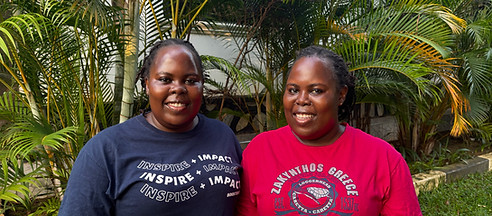
To counteract this situation, twins Esther Mukwana and Janet Namono founded the NGO "Whispers of Love Foundation" in Namulanda in 2020 .
For several years now, they have been teaching, caring for and feeding around 35 children between the ages of 4 and 13 annually, guaranteeing them a minimum education and providing them with a reasonably safe environment.

The project has a great appeal and charisma; the staff have managed to not only care for the children but also to identify and create employment opportunities for the mothers, such as basket weaving and the sale of the products.
The difficult living conditions of the children in Namulanda suggested the idea of opening a remote boarding school. The premises of the school in Namulanda, called the "Library," are rented; its future, and therefore that of the entire project, is uncertain, making sustainability crucial.

Moving is necessary - the Boarding School project
Thanks to a generous donation, the "Whispers of Love Foundation" was recently able to purchase land on Bussi Island for school buildings, as well as an adjacent ecologically valuable forest for the boarding school. There, the children will receive a safe home and a solid basic education.
One major factor is that the children at the boarding school are able to attend classes continuously – something that is almost impossible in Namulanda itself.


A hamlet is created.
In Buganda culture, the mango tree is a central symbol of community and hospitality. It is a natural gathering place and a traditional site for storytelling.
In the architect's design for the new school, a mango tree marks the center, around which the various buildings are grouped like around a village square. A total of four residential buildings, separated by gender and age, are planned, each housing a maximum of 16 children and one guardian. In addition to bedrooms, each building will have a kitchen, dining and living area, and bathroom facilities.
Furthermore, classrooms, a communal kitchen, an auditorium, additional utility buildings and guesthouses are planned.

Step by step
As of now (July 2026), clearing work and the construction of the infrastructure are currently underway.
Depending on the availability of funding, the accommodations, school buildings, and community gardens will be built first, followed by the auditorium and a sports field. Simultaneously, the network and staffing levels for teachers and support personnel will be expanded.
In the next phase, accommodations for people interested in ecology and other groups will be created.
The blog about the construction >>>